
Contents
Overview
America First is a recurring political slogan and movement in the United States advocating for policies that prioritize perceived national interests above international cooperation. Its historical manifestations range from Woodrow Wilson's pre-WWI neutrality pledges to the influential America First Committee's opposition to U.S. involvement in World War II. Most recently, Donald Trump revitalized the slogan during his 2016 presidential campaign and subsequent presidencies, framing it as a doctrine of 'America First' that led to withdrawals from international agreements and a focus on bilateral deals. The movement's core tenets often include economic protectionism, skepticism of global alliances, and a strong emphasis on national sovereignty, sparking continuous debate about its impact on global stability and American influence.
🎵 Origins & History
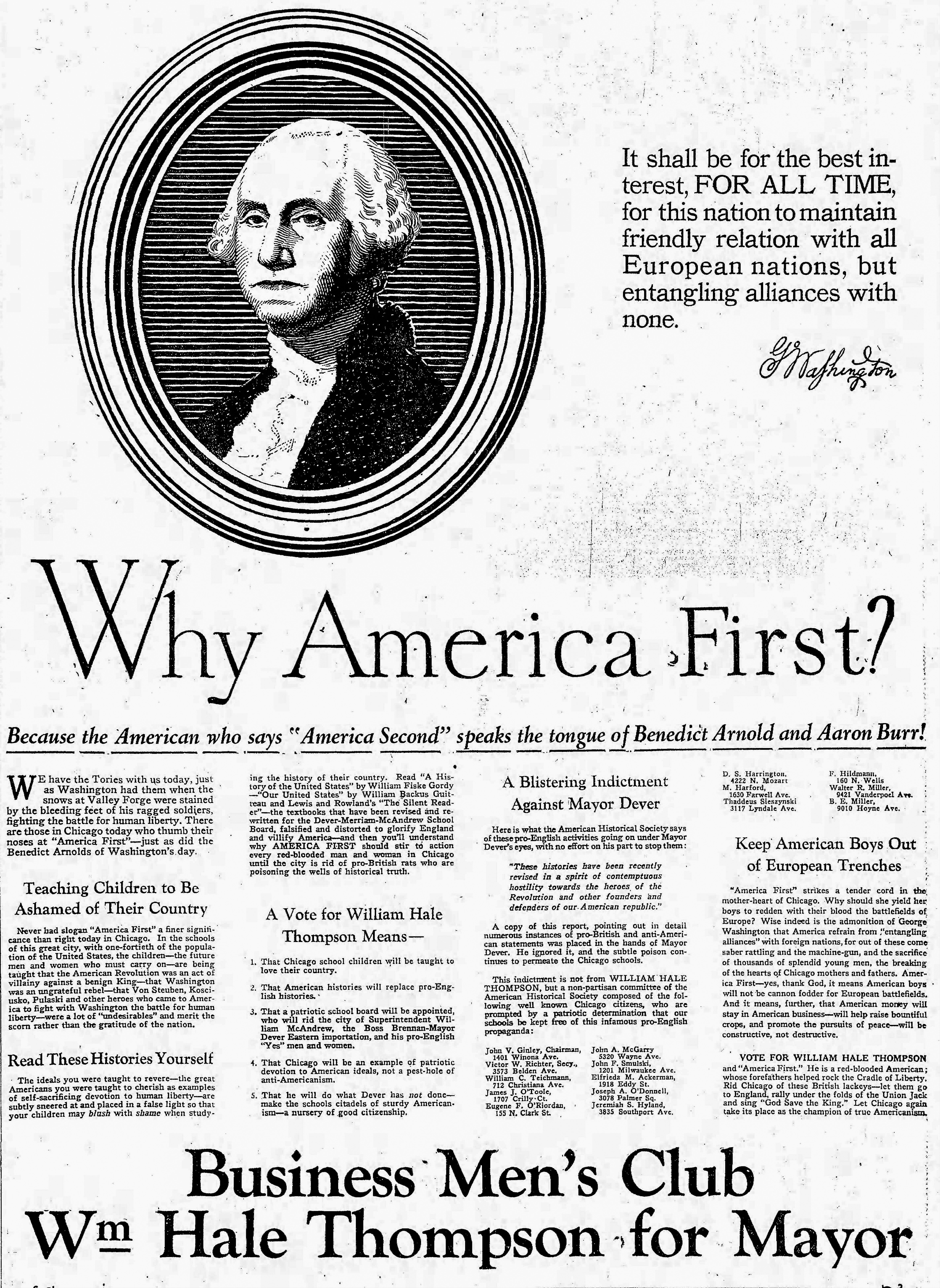
The concept of 'America First' as a distinct political stance traces its roots to the early 20th century, gaining significant traction during periods of global conflict. President Woodrow Wilson famously campaigned on a platform of neutrality in the lead-up to World War I. The most prominent historical iteration was the America First Committee, which marshaled significant public opposition to American intervention in World War II, drawing support from figures like Charles Lindbergh. Its arguments centered on the belief that U.S. involvement would be disastrous and that the nation's resources should be focused inward.
⚙️ How It Works
At its core, 'America First' operates by reorienting foreign policy away from multilateralism and international commitments towards a unilateral, national-interest-driven approach. This often translates into skepticism of international organizations like the United Nations and NATO, and a preference for bilateral trade agreements over global pacts. Economically, it typically champions protectionist measures such as tariffs and import quotas to safeguard domestic industries and jobs. The underlying philosophy posits that global engagement often dilutes national sovereignty and drains resources that could be better utilized domestically. This approach seeks to renegotiate existing international agreements or withdraw from them entirely if they are deemed disadvantageous to the United States.
📊 Key Facts & Numbers
During the Donald Trump presidency (2017-2021), the 'America First' doctrine was associated with policies that led to a reduction in U.S. contributions to international bodies and a renegotiation of trade deals like NAFTA (reportedly replaced by USMCA). The U.S. withdrawal from the Trans-Pacific Partnership agreement exemplified this shift, with some analyses suggesting it saved an estimated $100 billion annually in potential trade deficits.
👥 Key People & Organizations
Beyond the America First Committee's leadership, the movement has seen prominent advocates throughout American history. Charles Lindbergh, a celebrated aviator, became a visible spokesperson for the committee, delivering widely publicized speeches. In the 21st century, Donald Trump adopted 'America First' as a central tenet of his political brand, with his administration's foreign policy team implementing policies aligned with this philosophy. Organizations like America First Legal continue to advocate for policies rooted in this nationalist framework, focusing on issues such as immigration and regulatory reform.
🌍 Cultural Impact & Influence
The 'America First' slogan has profoundly shaped American discourse on foreign policy and national identity. Historically, it fueled debates about isolationism versus internationalism, particularly during the lead-up to both World Wars. The America First Committee's influence was significant enough to delay U.S. entry into WWII for a considerable period. In contemporary times, Donald Trump's use of the slogan has resonated with a segment of the electorate, influencing political campaigns and policy debates. It has also been a subject of critique, with opponents arguing that it fosters nationalism, damages international alliances, and can echo xenophobic sentiments, as seen in historical comparisons to earlier nativist movements and the controversial rhetoric employed by some of its proponents.
⚡ Current State & Latest Developments
The 'America First' movement remains a notable force within American politics, particularly within the Republican Party. Donald Trump continues to champion the ideology, and its principles are reflected in ongoing policy discussions regarding trade, immigration, and international relations. The movement is actively engaged in shaping legislative agendas and influencing public opinion through various think tanks and advocacy groups. Debates persist regarding the U.S. role in global conflicts, such as the war in Ukraine, with 'America First' proponents often advocating for reduced foreign aid and a focus on domestic priorities. The continued relevance of 'America First' in policy debates is anticipated.
🤔 Controversies & Debates
The primary controversy surrounding 'America First' centers on its perceived implications for global stability and American leadership. Critics argue that its emphasis on unilateralism and protectionism undermines international cooperation, weakens alliances like NATO, and can lead to trade wars and geopolitical tensions. The slogan has also faced accusations of echoing isolationist sentiments that historically proved detrimental, particularly in the face of rising authoritarianism prior to World War II. Conversely, proponents contend that 'America First' policies are essential for protecting American jobs, national sovereignty, and ensuring that U.S. resources are primarily directed towards domestic well-being. The debate often pits the ideals of internationalism and collective security against national self-interest and economic protectionism.
🔮 Future Outlook & Predictions
The future trajectory of 'America First' is intrinsically linked to the political fortunes of its contemporary champions, most notably Donald Trump. Should Trump or other figures espousing similar ideologies gain or retain significant political power, the movement is likely to continue influencing U.S. foreign and economic policy. This could lead to further renegotiations or withdrawals from international agreements, increased tariffs, and a more transactional approach to diplomacy. Alternatively, a decline in the movement's political influence could see a resurgence of more traditional internationalist foreign policy. The long-term impact will depend on how effectively its proponents can navigate global challenges and how the American electorate responds to its core tenets in an increasingly interconnected world.
💡 Practical Applications
The 'America First' philosophy has direct practical applications in trade policy, where it has led to the imposition of tariffs on imported goods, such as steel and aluminum, to protect domestic industries. In immigration, it has manifested as stricter border controls and reduced levels of legal immigration, aiming to prioritize national security and labor markets. Foreign policy applications include withdrawing from international treaties like the Paris Agreement on Climate Change and questioning the value of long-standing alliances. Economically, it informs decisions about industrial policy, encouraging domestic manufacturing and supply chain resilience, as seen in initiatives to bring production back to the United States from countries like China.
Key Facts
- Category
- movements
- Type
- topic