
Contents
Overview
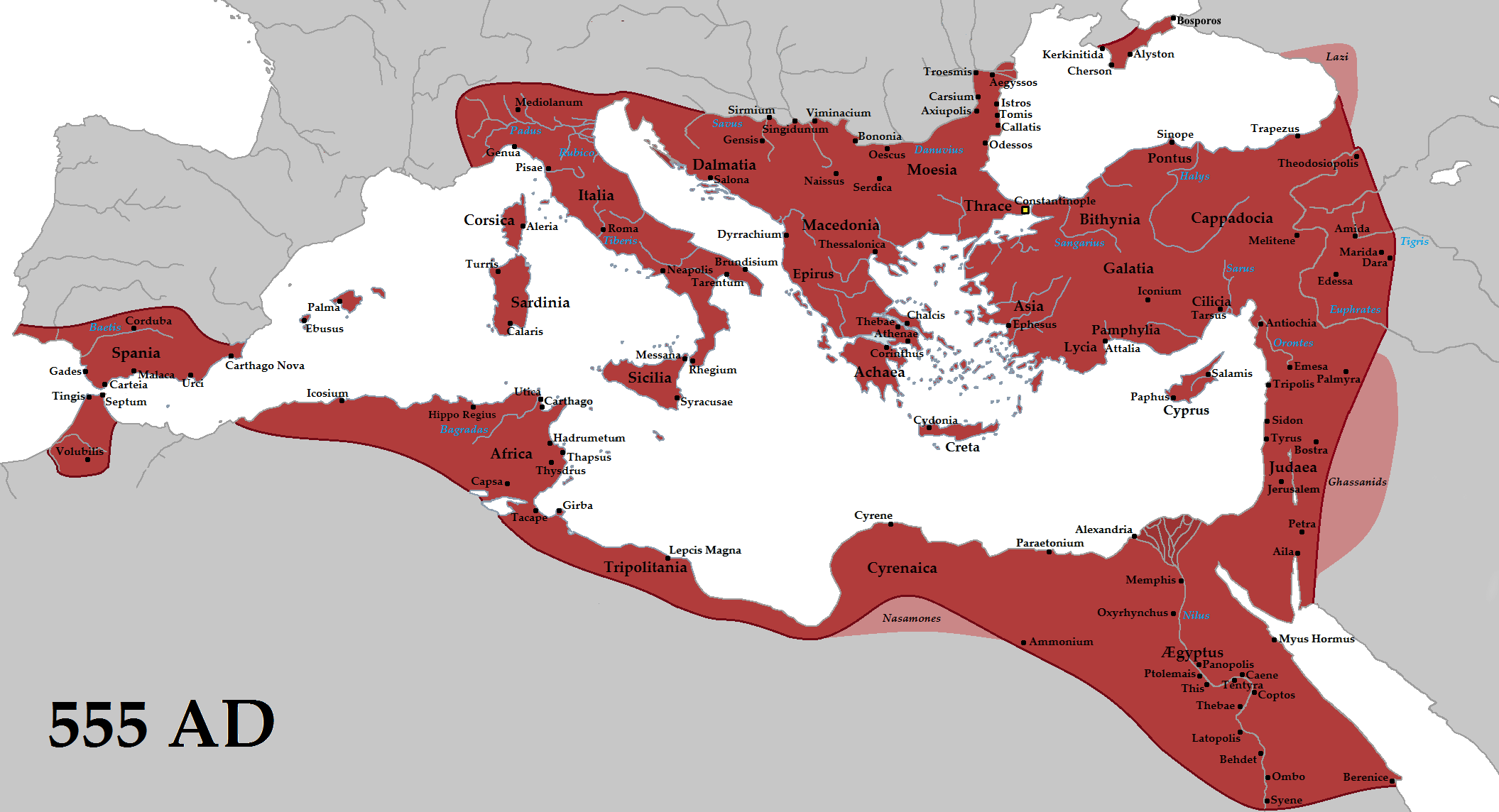
The Byzantine Empire's origins are traced to 330 CE when Roman Emperor Constantine I dedicated Constantinople as the new capital of the Roman Empire on the site of the ancient Greek city of Byzantium. While the Western Roman Empire collapsed in 476 CE, the Eastern Roman Empire, with its capital in Constantinople, endured for another millennium. Its citizens referred to themselves as 'Romans' and their empire as the 'Roman Empire,' a continuation of the legacy established by figures like Julius Caesar and Augustus. The term 'Byzantine Empire' was coined much later by historians to distinguish it from the earlier, Latin-speaking Roman Empire centered in Rome, a distinction that helped Western European states assert their own claims to Roman succession, as noted by scholars like Hieronymus Wolf. The empire experienced cycles of expansion and contraction, reaching its greatest territorial extent under Justinian I in the 6th century CE, and later facing significant challenges from the Arab conquests and the Seljuk Turks, as documented in historical accounts from sources like World History Encyclopedia and Wikipedia.
⚙️ Key Characteristics
The Byzantine Empire was characterized by its unique blend of Roman political traditions, Greek language and culture, and Orthodox Christianity. Greek gradually replaced Latin as the official language, and the empire developed its own distinct cultural identity, influenced by its Hellenistic heritage and its role as a major center of Christianity. The empire's governance was an absolute monarchy, with emperors holding significant power, as seen in the reigns of notable figures like Constantine I, Justinian I, and Basil II. The Byzantine military evolved over centuries, employing strategies and technologies like Greek Fire, which proved crucial in defending Constantinople against numerous sieges, as detailed in historical timelines from sources like The Latin Library and Britannica.
🌍 Cultural Impact
The Byzantine Empire was a major hub of art, architecture, and learning, significantly influencing the development of Eastern Orthodox Christianity and medieval European culture. The construction of magnificent structures like the Hagia Sophia in Constantinople, commissioned by Emperor Justinian I, showcased the empire's architectural prowess. Byzantine art, characterized by its mosaics and icons, played a vital role in religious expression and spread throughout Eastern Europe, impacting regions like Bulgaria, Serbia, and Russia. The empire also preserved numerous classical Greek and Roman texts, including the works of Plato and Aristotle, which were later rediscovered in the West, contributing to the Renaissance, as highlighted by resources like Smarthistory and History Adventures.
🔮 Legacy & Future
The legacy of the Byzantine Empire is profound, extending beyond its eventual fall to the Ottoman Turks in 1453 CE. Its role as a bulwark against invasions from the East for centuries provided a crucial buffer for Western Europe, allowing for its own development. The Byzantine Empire's legal system, codified by Justinian I, laid the groundwork for many modern legal systems. Furthermore, its cultural and religious influence on Eastern Europe, particularly through the spread of Orthodox Christianity and the Cyrillic alphabet, continues to be felt today. The empire's rich history and complex cultural contributions are explored in various academic and historical resources, including those from Wikipedia and History.com, underscoring its enduring significance.
Key Facts
- Year
- 330-1453 CE
- Origin
- Eastern Mediterranean (Constantinople)
- Category
- history
- Type
- place
Frequently Asked Questions
Why is it called the Byzantine Empire if its people called themselves Romans?
The term 'Byzantine Empire' was coined by historians after the empire's fall to distinguish it from the earlier, Latin-speaking Roman Empire centered in Rome. Its inhabitants consistently referred to themselves as 'Romans' and their empire as the 'Roman Empire,' viewing it as a direct continuation.
When did the Byzantine Empire officially begin and end?
The Byzantine Empire is generally considered to have begun in 330 CE with the dedication of Constantinople as the new capital by Emperor Constantine I. It officially ended with the fall of Constantinople to the Ottoman Turks in 1453 CE.
What was the significance of Constantinople?
Constantinople, strategically located on the Bosporus strait, served as the capital of the Byzantine Empire. Its formidable defenses and position as a major trade hub made it a center of power, wealth, and culture for over a thousand years, playing a crucial role in the empire's longevity and influence.
What was the main religion of the Byzantine Empire?
The Byzantine Empire was predominantly Christian, and it became the center of Eastern Orthodox Christianity. Christianity was legalized by Constantine I and later made the state religion by Theodosius I, deeply influencing the empire's culture, art, and politics.
How did the Byzantine Empire influence other cultures?
The Byzantine Empire significantly influenced Eastern Europe through the spread of Orthodox Christianity, its art and architecture (especially mosaics and icons), and its preservation of classical Greek and Roman literature. It also acted as a cultural and military buffer between Europe and Asia for centuries.
References
- en.wikipedia.org — /wiki/Byzantine_Empire
- britannica.com — /place/Byzantine-Empire
- history.com — /articles/byzantine-empire
- worldhistory.org — /Byzantine_Empire/
- livescience.com — /42158-history-of-the-byzantine-empire.html
- worldhistory.org — /timeline/Byzantine_Empire/
- smarthistory.org — /periods-of-the-byzantine-empire/
- en.wikipedia.org — /wiki/History_of_the_Byzantine_Empire