
Contents
- 🌍 What is the Eurasian Landmass?
- 📍 Core Territories & Strategic Chokepoints
- ⏳ Historical Vibe: Empires & Invasions
- ⚡ Geopolitical Vibe Score: 85/100
- ⚔️ Key Players & Shifting Alliances
- 📈 Economic Currents & Resource Flows
- 💡 Emerging Trends & Future Vibe
- 🤔 Navigating the Eurasian Crucible
- Frequently Asked Questions
- Related Topics
Overview
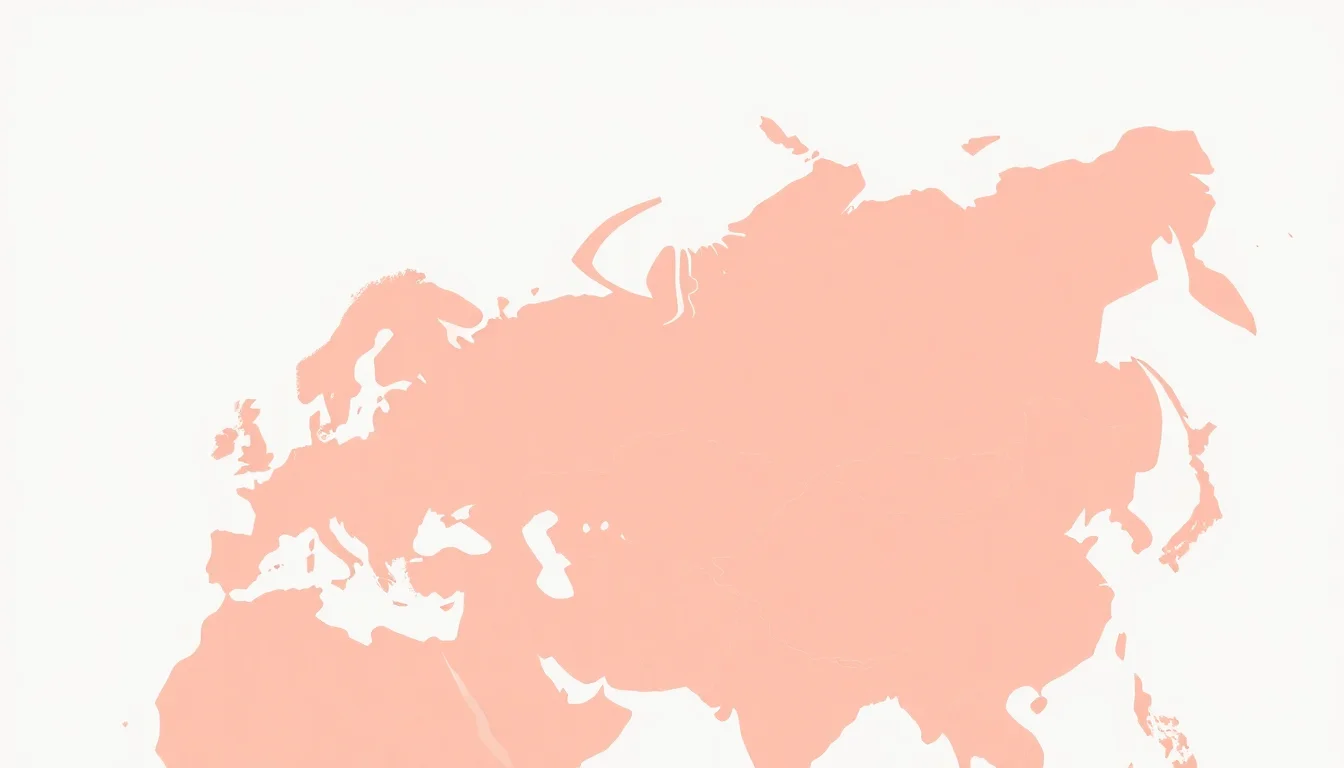
The Eurasia isn't just a continent; it's the planet's largest contiguous landmass, a sprawling stage where civilizations have clashed and coalesced for millennia. Encompassing everything from the Atlantic coast of Portugal to the Pacific shores of Russia, it's a geographical behemoth that dictates global power dynamics. Understanding Eurasia means grasping the sheer scale of human history, from the earliest migrations out of Africa to the complex geopolitical chess of the 21st century. Its immense size and diverse environments have fostered a rich tapestry of cultures, economies, and political systems, making it a perpetual crucible for human endeavor and conflict. This is the ultimate arena for understanding global power.
📍 Core Territories & Strategic Chokepoints
Strategically, Eurasia is defined by its critical chokepoints and vast interior. The Suez Canal and the Strait of Malacca are vital maritime arteries, while the Bering Strait offers a starkly different, yet equally significant, passage. Inland, the vast Euro-Asian Steppe has historically served as a highway for migrating peoples and invading armies, from the Mongols to modern military movements. Control over these arteries and access to the steppe's resources remains a perennial source of tension, shaping everything from trade routes to military deployments. The Silk Road's ancient legacy still echoes in modern infrastructure projects.
⏳ Historical Vibe: Empires & Invasions
Historically, Eurasia is a story of empires rising and falling, driven by the movement of peoples and the pursuit of resources. The Roman Empire's western reach met the eastern expanse of empires like the Sasanian Empire and later the Ottoman Empire. The Mongol invasions of the 13th century reshaped the political map, creating the largest contiguous empire in history and facilitating unprecedented cultural exchange, albeit through brutal conquest. Later, European colonial powers carved up parts of the periphery, while internal empires like Imperial Russia and Qing Dynasty China dominated vast swathes of the interior. This long history of conquest and consolidation has left an indelible mark on the region's ethnic and political boundaries.
⚡ Geopolitical Vibe Score: 85/100
The Eurasian Landmass commands a Vibe Score of 85/100, reflecting its immense and often volatile influence on global affairs. This score is driven by the sheer concentration of major powers, critical resources, and historical fault lines within its borders. From the economic might of China and the EU to the military power of Russia and the burgeoning influence of India, the region is a constant source of geopolitical energy. Debates over trade, security, and ideological influence are perpetual, making Eurasia the undisputed epicenter of global strategic competition. Its internal dynamics ripple outwards, affecting every corner of the planet.
⚔️ Key Players & Shifting Alliances
The primary actors in the Eurasian geopolitical drama are manifold and their relationships are constantly in flux. China's Belt and Road Initiative (BRI) seeks to weave new economic and infrastructural ties across the continent, often challenging existing power structures. Russia, with its vast territory and historical influence, plays a crucial role in Central Asia and Eastern Europe, often acting as a counterweight to Western influence. The European Union represents a significant economic and political bloc, grappling with its eastern and southern peripheries. India's growing economic and demographic weight adds another critical dimension, particularly in South and Central Asia. The United States also maintains a significant presence and influence, particularly through its alliances in East Asia and its historical engagement in the Middle East.
📈 Economic Currents & Resource Flows
Economically, Eurasia is a powerhouse, home to some of the world's largest economies and most critical resource reserves. It controls vast deposits of oil and natural gas, particularly in the Middle East and Siberia, which fuel global energy markets. China's manufacturing prowess and its role as the 'world's factory' are central to global supply chains. The continent also boasts significant agricultural output and a growing technological sector. However, disparities in wealth and development are stark, leading to internal economic tensions and competition for market access and resource control. The New Silk Roads are a testament to this economic drive.
💡 Emerging Trends & Future Vibe
The future vibe of Eurasia is one of intensified competition and potential realignment. The ongoing rivalry between the United States and China is increasingly playing out across the Eurasian continent, with both powers vying for influence in Central Asia, Eastern Europe, and the Indo-Pacific. The rise of regional blocs and the potential for new security architectures are key trends. Furthermore, the impacts of climate change on resource availability and migration patterns could introduce new destabilizing factors. The question isn't if Eurasia will continue to shape the global order, but how its internal power struggles will manifest and who will ultimately benefit or suffer. The Arctic region is also emerging as a new frontier for geopolitical interest.
Key Facts
- Year
- Prehistory
- Origin
- Geological formation and subsequent human migration patterns
- Category
- Geopolitics & Geography
- Type
- Geopolitical Region
Frequently Asked Questions
What is the primary difference between Eurasia and the Eurasian Landmass?
While 'Eurasia' often refers to the combined geographical and cultural entity of Europe and Asia, the 'Eurasian Landmass' emphasizes the contiguous physical expanse of this supercontinent. Geopolitically, it highlights the interconnectedness and shared strategic space that transcends the traditional European-Asian divide. Think of it as the physical foundation upon which historical and contemporary geopolitical dramas unfold, from the Euro-Asian Steppe to the critical maritime chokepoints.
Which historical events most significantly shaped the current geopolitical landscape of Eurasia?
The Mongol invasions of the 13th century fundamentally altered the political and demographic map, creating vast interconnected empires and facilitating East-West exchange. The subsequent rise and fall of empires like the Ottoman Empire, Safavids, and Mughal Empire solidified regional power structures. More recently, the Cold War and the collapse of the Soviet Union in 1991 redrew borders and created new geopolitical fault lines, particularly in Eastern Europe and Central Asia. The legacy of colonialism also continues to influence dynamics in the southern and eastern peripheries.
How does the Eurasian Landmass influence global trade and economics?
The Eurasian Landmass is the engine of global trade, housing major manufacturing hubs like China and significant resource-rich regions like the Middle East and Russia. Its vast network of land and sea routes, from the ancient Silk Road to modern shipping lanes and the BRI, dictates the flow of goods worldwide. Control over key transit points, such as the Suez Canal and Strait of Malacca, grants significant economic leverage. The continent's energy resources are particularly critical for powering global industries.
What are the main geopolitical tensions within Eurasia today?
Key tensions include the rivalry between the United States and China, which plays out across various Eurasian theaters. Russia's strategic objectives in its near abroad, particularly concerning Ukraine and the Baltic states, remain a significant flashpoint. Competition for influence in Central Asia among regional powers and external actors is ongoing. Furthermore, managing resource competition, particularly for energy and water, and addressing the spillover effects of conflicts in the Middle East contribute to the region's volatility. The Nagorno-Karabakh conflict is another persistent source of regional instability.
What is the significance of the Euro-Asian Steppe in a geopolitical context?
The Euro-Asian Steppe has historically been a crucial corridor for migration, trade, and conquest, enabling the rise of nomadic empires like the Mongol Empire. Its vastness and relative lack of natural barriers made it a pathway for peoples and armies to traverse between Eastern Europe and East Asia. Today, it remains strategically important for land-based transportation and resource extraction, and its historical role continues to inform perceptions of connectivity and vulnerability across the continent. It's a physical manifestation of Eurasia's interconnectedness.
How does the Eurasian Plate relate to the geopolitical Eurasian Landmass?
The Eurasian Plate is a geological tectonic plate, while the Eurasian Landmass refers to the combined continents of Europe and Asia. While distinct, their names are linked due to geographical convention. The geological forces of the Eurasian Plate have shaped the physical landscape of the landmass over millions of years, influencing topography, resource distribution, and even seismic activity, which can indirectly impact human settlement and strategic considerations. However, the geopolitical dynamics are driven by human factors, not tectonic ones.