
Contents
- ⚡ What is a Reaction Turbine?
- ⚙️ How Does It Work? The Core Mechanics
- 💡 Key Components and Design Variations
- 🌊 Where Do You Find Them? Applications Galore
- ⚖️ Reaction vs. Impulse: The Big Debate
- 📈 Historical Roots and Evolution
- 💰 Cost Considerations and Efficiency
- 🌍 Environmental Impact and Sustainability
- 🚀 The Future of Reaction Turbines
- 👍 Getting Started with Reaction Turbines
- Frequently Asked Questions
- Related Topics
Overview
Reaction turbines are a cornerstone of modern hydropower, converting both the pressure and kinetic energy of a fluid into rotational mechanical work. Unlike impulse turbines, which rely solely on jet velocity, reaction turbines are fully submerged and operate under pressure. The fluid's expansion within the turbine blades causes a change in momentum, generating torque. This principle makes them exceptionally efficient for a wide range of head conditions, from low to high. Key examples include the Francis turbine, a versatile workhorse, and the Kaplan turbine, ideal for very low heads. Their widespread adoption in hydroelectric dams globally underscores their significance in renewable energy production.
⚡ What is a Reaction Turbine?
A reaction turbine is a type of turbomachine that operates by harnessing the pressure drop of a working fluid across its rotor. Unlike its impulse counterpart, a reaction turbine generates torque due to the reaction force created by the fluid accelerating as it passes through stationary nozzles and then the rotating blades. This fundamental principle allows it to extract energy from both the pressure and kinetic energy of the fluid. They are the workhorses of many hydroelectric power facilities, silently converting the potential energy of water into rotational motion that drives generators.
⚙️ How Does It Work? The Core Mechanics
The magic of a reaction turbine lies in its staged energy extraction. Fluid enters the turbine under pressure, flows through stationary guide vanes that direct it onto the rotor blades at an optimal angle, and then expands through the rotor. As the fluid expands and its pressure decreases across the rotor passages, its velocity increases, creating a reactive thrust on the blades. This continuous acceleration and pressure drop across the rotor assembly impart rotational energy to the shaft, which is then transmitted to a electrical generator to produce power.
💡 Key Components and Design Variations
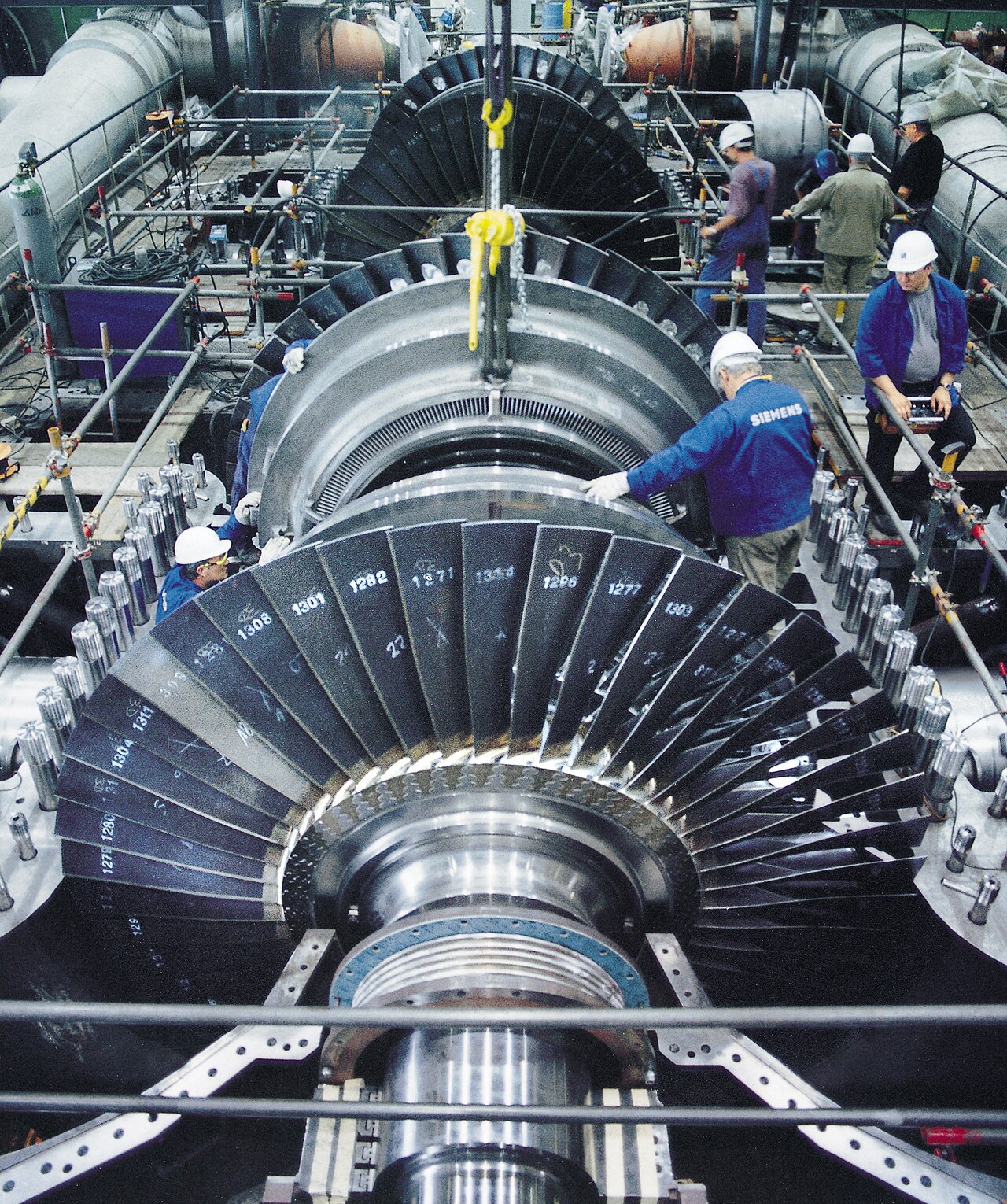
At its heart, a reaction turbine comprises a stationary casing, guide vanes (or stator blades), and a rotor assembly with buckets or blades. The design of these components is critical. For instance, Francis turbines are a common type, featuring a spiral casing and adjustable guide vanes to manage flow and efficiency across a wide range of head and flow conditions. Kaplan turbines, on the other hand, are characterized by adjustable propeller-like blades, making them ideal for low-head, high-flow applications like those found in run-of-river hydropower projects.
🌊 Where Do You Find Them? Applications Galore
You'll encounter reaction turbines in a variety of demanding environments. Their primary application is in hydropower generation, where they are crucial for converting the energy of falling water into electricity. Beyond water, they are also employed in steam turbines within fossil fuel power plants and nuclear power plants, where high-pressure steam drives the turbine. Even in gas turbines, a form of reaction principle is at play, though often blended with impulse characteristics.
⚖️ Reaction vs. Impulse: The Big Debate
The distinction between reaction and impulse turbines is a cornerstone of turbomachinery design. Impulse turbines, like the Pelton turbine, operate by deflecting a high-velocity jet of fluid, transferring momentum to the buckets. In contrast, reaction turbines rely on the fluid's expansion and acceleration through the rotor passages. This means that in a reaction turbine, the fluid pressure drops across both the stationary and rotating components, a key difference that dictates their optimal operating conditions and efficiency curves.
📈 Historical Roots and Evolution
The lineage of reaction turbines traces back to ancient water-lifting devices, but their modern engineering really took off in the 19th century. The development of the Francis turbine by James B. Francis in the 1840s was a pivotal moment, offering unprecedented efficiency and versatility for hydropower. Later, the invention of the Kaplan turbine by Viktor Kaplan in the early 20th century revolutionized low-head hydropower, enabling the development of sites previously considered uneconomical.
💰 Cost Considerations and Efficiency
The efficiency of a reaction turbine is a major selling point, often exceeding 90% in optimal conditions. However, achieving this requires careful matching of the turbine design to the specific site's water head and flow rate. While the initial capital cost for a high-efficiency reaction turbine can be substantial, their long operational lifespan and high energy output typically result in a favorable levelized cost of energy over their service life. Maintenance costs are generally moderate but depend heavily on fluid quality and operating conditions.
🌍 Environmental Impact and Sustainability
Reaction turbines, particularly in hydropower, are celebrated for their low environmental footprint during operation. They don't consume fuel and produce no direct emissions. However, the construction of large hydropower dams can have significant ecological impacts, including habitat alteration and disruption of fish migration. Modern designs and operational strategies, such as fish-friendly turbines, aim to mitigate these effects, pushing towards more sustainable energy solutions.
🚀 The Future of Reaction Turbines
The future of reaction turbines is intrinsically linked to the global push for renewable energy. Innovations are focusing on improving efficiency at off-design conditions, reducing cavitation damage, and developing turbines for smaller-scale and distributed energy generation systems. Research into advanced materials and computational fluid dynamics is enabling more optimized designs, while the integration with energy storage systems will further enhance their role in grid stability.
👍 Getting Started with Reaction Turbines
To explore reaction turbines for a project, start by defining your site's water head and flow rate characteristics. Consult with turbomachinery manufacturers specializing in hydropower or industrial turbines. They can guide you through the selection process, recommending specific turbine types like Francis or Kaplan based on your requirements. Understanding the efficiency curves and projected lifespan of different models is crucial for making an informed decision about investment and long-term performance.
Key Facts
- Year
- 1848
- Origin
- United Kingdom
- Category
- Mechanical Engineering / Energy Generation
- Type
- Technology
Frequently Asked Questions
What's the main difference between a reaction turbine and an impulse turbine?
The primary distinction lies in how they extract energy. Impulse turbines use a high-velocity jet to strike buckets, transferring momentum. Reaction turbines, conversely, rely on the fluid expanding and accelerating through the rotor passages, creating a pressure drop and a reactive force that drives rotation. This means pressure drops across both stationary and rotating parts in a reaction turbine.
Which type of reaction turbine is best for low-head applications?
For low-head, high-flow applications, the Kaplan turbine is generally the preferred choice. Its adjustable propeller-like blades allow it to maintain high efficiency across a wide range of flow rates, which is common in rivers and tidal power sites where the water head is not substantial.
Can reaction turbines be used with fluids other than water?
Absolutely. While most commonly associated with hydropower, reaction turbines are extensively used as steam turbines in thermal power plants (coal, gas, nuclear) to convert the energy of high-pressure steam into rotational motion. They can also be adapted for other pressurized fluid systems.
What is 'cavitation' in a reaction turbine, and why is it a problem?
Cavitation occurs when the pressure within the fluid drops below its vapor pressure, causing vapor bubbles to form and then collapse violently. This rapid collapse creates shockwaves that can erode turbine components, leading to damage and reduced efficiency. It's a significant concern in high-speed turbines operating at low heads.
How do guide vanes contribute to a reaction turbine's operation?
Guide vanes, also known as stator blades, are stationary components that direct the incoming fluid onto the rotor blades at the optimal angle. They can often be adjusted (as in Francis turbines) to control the flow rate and maintain high efficiency across varying operating conditions, playing a crucial role in the turbine's performance and regulation.
Are reaction turbines efficient in partial load conditions?
The efficiency of reaction turbines can decrease significantly at partial load conditions compared to their peak performance. However, modern designs, particularly those with adjustable guide vanes or variable speed operation, are engineered to maintain relatively good efficiency over a broader operating range than older fixed-geometry designs.