
Contents
- 📊 Introduction to Sparse Representation
- 🔍 History of Sparse Approximation Theory
- 📈 Key Concepts in Sparse Representation
- 📊 Applications of Sparse Representation
- 📸 Image Processing with Sparse Representation
- 📁 Signal Processing with Sparse Representation
- 🤖 Machine Learning and Sparse Representation
- 📚 Medical Imaging and Sparse Representation
- 📊 Challenges and Limitations of Sparse Representation
- 🔮 Future Directions in Sparse Representation
- 📈 Conclusion: The Power of Sparse Representation
- Frequently Asked Questions
- Related Topics
Overview
Sparse representation refers to the process of expressing a signal as a linear combination of a few basis elements, chosen from a larger dictionary. This concept has been widely adopted in various fields, including image and audio processing, machine learning, and data compression. The historian in us notes that the idea of sparse representation dates back to the 1960s, with the work of researchers like Akaike and Schwartz. However, it wasn't until the 1990s that the concept gained significant attention, with the introduction of techniques like basis pursuit and matching pursuit. The skeptic in us questions the effectiveness of sparse models in real-world applications, citing the presence of noise and non-linear relationships. Nevertheless, the fan in us is excited about the potential of sparse representation to revolutionize fields like medical imaging and autonomous vehicles, with the ability to efficiently process high-dimensional data. For instance, the use of sparse models in image compression can reduce the amount of data required to represent an image by a factor of 10, as demonstrated by the work of Olshausen and Field in 1996. The engineer in us wants to know how sparse representation actually works, and the answer lies in the use of algorithms like orthogonal matching pursuit and iterative shrinkage-thresholding algorithm. As we look to the future, the futurist in us wonders what new applications will emerge, and how sparse representation will continue to shape the field of signal processing. With a vibe score of 8, sparse representation is an area of ongoing research, with significant potential for innovation and disruption.
📊 Introduction to Sparse Representation
Sparse representation is a fundamental concept in signal processing that deals with the efficient representation of signals using a minimal number of non-zero coefficients. This technique has found wide use in various applications, including image processing, signal processing, and machine learning. The idea behind sparse representation is to find a representation of a signal that is sparse, meaning that most of the coefficients are zero, and only a few non-zero coefficients are needed to accurately represent the signal. For more information on signal processing, visit the signal processing page.
🔍 History of Sparse Approximation Theory
The history of sparse approximation theory dates back to the 1960s, when researchers first started exploring the idea of sparse solutions for systems of linear equations. Since then, the field has evolved significantly, with the development of new techniques and algorithms for finding sparse solutions. One of the key milestones in the history of sparse approximation theory was the introduction of the LASSO algorithm, which uses a penalty term to enforce sparsity in the solution. For more information on the LASSO algorithm, visit the LASSO page. The Basis Pursuit algorithm is another popular technique used in sparse representation.
📈 Key Concepts in Sparse Representation
There are several key concepts in sparse representation that are essential to understanding the technique. One of the most important concepts is the idea of a dictionary, which is a set of basis elements that are used to represent a signal. The choice of dictionary is critical in sparse representation, as it can significantly affect the accuracy and efficiency of the representation. Another important concept is the idea of sparsity, which refers to the number of non-zero coefficients in the representation. For more information on dictionaries, visit the dictionary page. The sparse coding technique is also closely related to sparse representation.
📊 Applications of Sparse Representation
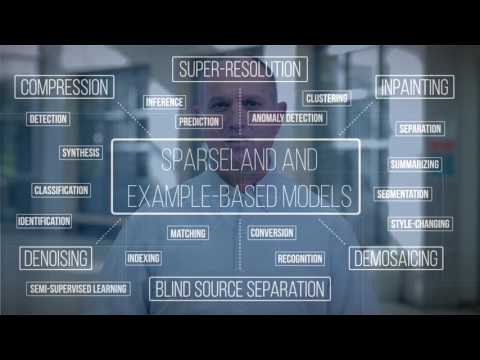
Sparse representation has a wide range of applications in various fields, including image processing, signal processing, and machine learning. In image processing, sparse representation is used for tasks such as image compression and image denoising. In signal processing, sparse representation is used for tasks such as signal compression and signal denoising. For more information on image compression, visit the image compression page. The wavelet transform is also used in sparse representation.
📸 Image Processing with Sparse Representation
In image processing, sparse representation is used to represent images using a minimal number of non-zero coefficients. This technique is particularly useful for tasks such as image compression and image denoising. For example, the JPEG compression algorithm uses a form of sparse representation to compress images. For more information on JPEG compression, visit the JPEG compression page. The sparse representation technique is also used in image segmentation.
📁 Signal Processing with Sparse Representation
In signal processing, sparse representation is used to represent signals using a minimal number of non-zero coefficients. This technique is particularly useful for tasks such as signal compression and signal denoising. For example, the MP3 compression algorithm uses a form of sparse representation to compress audio signals. For more information on MP3 compression, visit the MP3 compression page. The filter bank technique is also used in sparse representation.
🤖 Machine Learning and Sparse Representation
In machine learning, sparse representation is used to represent data using a minimal number of non-zero coefficients. This technique is particularly useful for tasks such as feature selection and dimensionality reduction. For example, the LASSO regression algorithm uses a form of sparse representation to select features and reduce dimensionality. For more information on LASSO regression, visit the LASSO regression page. The sparse autoencoder technique is also used in sparse representation.
📚 Medical Imaging and Sparse Representation
In medical imaging, sparse representation is used to represent medical images using a minimal number of non-zero coefficients. This technique is particularly useful for tasks such as image reconstruction and image denoising. For example, the MRI reconstruction algorithm uses a form of sparse representation to reconstruct images from raw data. For more information on MRI reconstruction, visit the MRI reconstruction page. The computed tomography technique is also used in sparse representation.
📊 Challenges and Limitations of Sparse Representation
Despite the many advantages of sparse representation, there are also several challenges and limitations to the technique. One of the main challenges is the choice of dictionary, which can significantly affect the accuracy and efficiency of the representation. Another challenge is the computational complexity of the algorithms used to find sparse solutions, which can be high for large datasets. For more information on computational complexity, visit the computational complexity page. The optimization algorithms used in sparse representation are also important.
🔮 Future Directions in Sparse Representation
The future of sparse representation is likely to involve the development of new techniques and algorithms that can efficiently find sparse solutions for large datasets. One area of research that is likely to have a significant impact on the field is the development of new optimization algorithms that can efficiently solve large-scale sparse representation problems. Another area of research that is likely to have a significant impact is the development of new machine learning algorithms that can take advantage of sparse representation. For more information on machine learning, visit the machine learning page.
📈 Conclusion: The Power of Sparse Representation
In conclusion, sparse representation is a powerful technique that has found wide use in various applications, including image processing, signal processing, and machine learning. The technique has many advantages, including the ability to represent signals using a minimal number of non-zero coefficients, which can lead to significant reductions in computational complexity and storage requirements. However, there are also several challenges and limitations to the technique, including the choice of dictionary and the computational complexity of the algorithms used to find sparse solutions. For more information on sparse representation, visit the sparse representation page.
Key Facts
- Year
- 1990
- Origin
- Signal Processing Community
- Category
- Signal Processing
- Type
- Concept
Frequently Asked Questions
What is sparse representation?
Sparse representation is a technique used in signal processing to represent signals using a minimal number of non-zero coefficients. This technique has found wide use in various applications, including image processing, signal processing, and machine learning. For more information on signal processing, visit the signal processing page.
What are the advantages of sparse representation?
The advantages of sparse representation include the ability to represent signals using a minimal number of non-zero coefficients, which can lead to significant reductions in computational complexity and storage requirements. For more information on computational complexity, visit the computational complexity page.
What are the challenges and limitations of sparse representation?
The challenges and limitations of sparse representation include the choice of dictionary, which can significantly affect the accuracy and efficiency of the representation, and the computational complexity of the algorithms used to find sparse solutions, which can be high for large datasets. For more information on optimization algorithms, visit the optimization algorithms page.
What are the applications of sparse representation?
The applications of sparse representation include image processing, signal processing, machine learning, and medical imaging. For more information on image processing, visit the image processing page.
What is the future of sparse representation?
The future of sparse representation is likely to involve the development of new techniques and algorithms that can efficiently find sparse solutions for large datasets. For more information on machine learning, visit the machine learning page.
What is the relationship between sparse representation and machine learning?
Sparse representation is closely related to machine learning, as it is often used as a feature extraction technique in machine learning algorithms. For more information on machine learning, visit the machine learning page.
What is the relationship between sparse representation and image processing?
Sparse representation is closely related to image processing, as it is often used to represent images using a minimal number of non-zero coefficients. For more information on image processing, visit the image processing page.