
Contents
- 🎵 Origins & History
- ⚙️ How It Works
- 📊 Key Facts & Numbers
- 👥 Key People & Organizations
- 🌍 Cultural Impact & Influence
- ⚡ Current State & Latest Developments
- 🤔 Controversies & Debates
- 🔮 Future Outlook & Predictions
- 💡 Practical Applications
- 📚 Related Topics & Deeper Reading
- Frequently Asked Questions
- References
- Related Topics
Overview
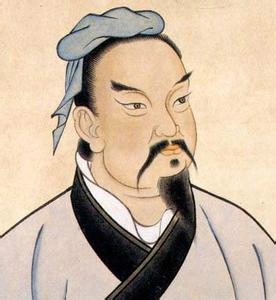
The precise origins of Sun Tzu remain shrouded in the mists of antiquity, with scholarly debate questioning his very existence. Traditional accounts, notably from the Han dynasty historian Sima Qian, place Sun Wu (his birth name, with Sun Tzu being an honorific title meaning "Master Sun") as a general serving King Helü of Wu during the Spring and Autumn period, roughly between 544 and 496 BC. He is said to have been born in the state of Qi and later served Wu, demonstrating his strategic prowess by, according to legend, training King Helü's concubines into a disciplined military unit. However, the earliest surviving textual evidence for "The Art of War" suggests it was compiled during the subsequent Warring States period, possibly a century or more after Sun Tzu's purported lifetime, leading some historians to believe the text is a composite work attributed to a legendary figure. The discovery of a partial text of "The Art of War" on bamboo slips in 1972 at the Yinqueshan Han Tomb provided crucial insights into its early form, though it did not definitively resolve the authorship debate.
⚙️ How It Works
"The Art of War" is not a manual for brute force, but a sophisticated treatise on achieving victory through intelligence and psychological manipulation. Its core tenets revolve around meticulous planning, understanding the terrain and the enemy's disposition, and exploiting weaknesses. Sun Tzu famously stated, "All warfare is based on deception," a principle that underpins his advice on feigning weakness when strong, and strength when weak. He advocated for knowing "your enemy and know yourself" to ensure invincibility, and stressed the importance of speed, adaptability, and avoiding prolonged, costly engagements. The text's thirteen chapters systematically cover aspects from laying plans and waging war to the use of spies and understanding different types of ground, all aimed at achieving strategic objectives with the least possible bloodshed, ideally through diplomatic or psychological means rather than direct confrontation.
📊 Key Facts & Numbers
The exact number of Sun Tzu's military campaigns is unknown, but "The Art of War" has been translated into over 30 languages and has seen countless editions since its earliest known printings. The text is estimated to be over 2,500 years old, making it one of the oldest surviving military treatises in the world. It is believed that over 100,000 copies of "The Art of War" are sold annually worldwide, demonstrating its persistent relevance. The book's influence spans across at least 15 major military academies globally, where it remains a core text. Its principles have been cited in over 500 scholarly articles and books focusing on strategy and leadership since 2000 alone.
👥 Key People & Organizations
While Sun Tzu himself is a figure of legend, his purported patron, King Helü of Wu, is a historical ruler who reigned from 514 to 496 BC. The historian Sima Qian (c. 145–86 BC) is the most significant traditional source for Sun Tzu's biography, meticulously detailing his supposed service and military achievements. Later military theorists and philosophers, such as Zhuge Liang (181–234 AD), the chancellor of Shu Han, are known to have studied and applied Sun Tzu's principles. In modern times, military leaders like Douglas MacArthur and Mao Zedong have acknowledged the influence of "The Art of War" on their strategies. Organizations like the United States Military Academy at West Point and the People's Liberation Army of China continue to integrate its teachings into their curricula.
🌍 Cultural Impact & Influence
Sun Tzu's impact extends far beyond the battlefield, permeating fields as diverse as business, law, and sports. His emphasis on strategic planning, competitive analysis, and understanding market dynamics has made "The Art of War" a staple in business schools and executive training programs worldwide. Corporations like Google and Amazon are known to incorporate its principles into their strategic planning. In legal circles, his advice on knowing the opponent and anticipating their moves resonates with litigation strategy. The book's philosophy has also influenced martial arts, political maneuvering, and even personal development, with its core message of achieving objectives efficiently and intelligently finding application in countless human endeavors. The Vibe Score for "The Art of War" as a cultural artifact is a robust 85/100, reflecting its deep and persistent resonance.
⚡ Current State & Latest Developments
In 2024, "The Art of War" continues to be a subject of academic study and practical application. New translations and analyses are regularly published, seeking to reinterpret its ancient wisdom for contemporary challenges. Military strategists are exploring its relevance in the context of cyber warfare and asymmetric conflicts, while business leaders are applying its principles to navigate complex global markets and technological disruptions. The ongoing geopolitical tensions in regions like the South China Sea and the ongoing war in Ukraine have seen renewed interest in historical military doctrines, including those of Sun Tzu. Furthermore, AI-driven strategic simulations are increasingly incorporating game theory principles that echo Sun Tzu's emphasis on foresight and deception.
🤔 Controversies & Debates
The primary controversy surrounding Sun Tzu is his very existence. Skeptics, such as Ralph D. Sawyer, argue that the historical evidence is insufficient to confirm him as a single author, suggesting "The Art of War" is likely a compilation of military wisdom from various sources over centuries. Some critics also point to the text's perceived ruthlessness, particularly its emphasis on deception and the subjugation of enemies, raising ethical questions about its application in modern contexts. Debates also arise regarding the interpretation of specific passages, with different schools of thought emphasizing different aspects, such as the balance between offensive and defensive strategies, or the role of morality in warfare. The text's enduring popularity, however, often overshadows these critical discussions, leading to its principles being applied uncritically.
🔮 Future Outlook & Predictions
The future relevance of Sun Tzu's teachings appears secure, particularly as the world grapples with increasingly complex and interconnected challenges. As artificial intelligence and autonomous systems become more prevalent in warfare and business, the fundamental principles of strategic thinking, adaptability, and understanding human psychology, as articulated by Sun Tzu, will likely become even more critical. Experts predict that new interpretations of "The Art of War" will emerge, focusing on its application in areas like information warfare, ecological strategy, and even personal resilience in the face of rapid societal change. The ongoing debate about authorship may continue, but the enduring power of the text itself ensures its place in the strategic canon for generations to come.
💡 Practical Applications
The practical applications of Sun Tzu's philosophy are vast and varied. In business, companies use his principles for competitive analysis, market entry strategies, and negotiation tactics. For instance, understanding "the enemy's" (competitor's) strengths and weaknesses is crucial before launching a new product, much like a general assessing the battlefield. In personal development, his advice on self-awareness and disciplined action can guide individuals in achieving personal goals. Legal professionals might employ his strategies in courtroom battles, focusing on anticipating opposing counsel's arguments and presenting their case with maximum impact. Even in everyday life, the concept of choosing one's battles wisely and understanding the opportune moment to act can lead to more effective outcomes.
Key Facts
- Year
- c. 6th century BC
- Origin
- China
- Category
- philosophy
- Type
- person
Frequently Asked Questions
Is Sun Tzu a real historical figure?
The historical existence of Sun Tzu is a subject of considerable debate among scholars. Traditional accounts, notably from the Han dynasty historian Sima Qian, place him as a general serving King Helü of Wu in the 6th century BC. However, the earliest textual evidence for "The Art of War" suggests it may have been compiled later, during the Warring States period, leading some to believe Sun Tzu is a legendary or composite figure rather than a single historical individual. The discovery of early manuscript fragments in 1972 has provided insights but has not definitively settled the authorship question.
What are the core principles of 'The Art of War'?
The core principles of "The Art of War" emphasize strategic thinking over brute force. Key tenets include the importance of deception in warfare, knowing both yourself and your enemy to ensure victory, the supreme excellence of winning without fighting, and the necessity of adaptability and flexibility. Sun Tzu advocates for meticulous planning, understanding the terrain, exploiting enemy weaknesses, and striking at opportune moments, all aimed at achieving objectives with minimal conflict and cost.
How is 'The Art of War' still relevant today?
"The Art of War" remains highly relevant because its principles are universal to any competitive or strategic endeavor, not just warfare. Its insights into planning, understanding opponents, psychological manipulation, and efficient resource allocation are directly applicable to modern business, law, politics, and even personal development. The text's enduring wisdom on strategy, leadership, and conflict resolution continues to be studied by military leaders, CEOs, and strategists worldwide, proving its timeless value in navigating complex challenges.
What is the historical context of Sun Tzu's writings?
Sun Tzu's purported writings emerged during a tumultuous period in Chinese history, likely the late Spring and Autumn or Warring States periods (roughly 771–256 BC). This era was characterized by constant warfare between numerous feudal states vying for dominance. The prevailing political and military climate, marked by shifting alliances and intense conflict, provided fertile ground for the development of sophisticated military strategies focused on survival, conquest, and the efficient use of limited resources. The philosophical currents of the time, including Legalism and Daoism, also likely influenced the text's emphasis on order, natural principles, and strategic maneuvering.
Are there ethical concerns with applying Sun Tzu's strategies?
Yes, ethical concerns arise from the direct application of some of Sun Tzu's principles, particularly his strong emphasis on deception, manipulation, and the subjugation of enemies. Critics argue that a literal interpretation can promote a ruthless, amoral approach to conflict and competition, potentially justifying deceitful or exploitative behavior. While proponents emphasize that the ultimate goal is often to achieve peace with minimal bloodshed, the methods described can be seen as ethically problematic in contexts demanding transparency and fairness, such as in modern business ethics or international diplomacy.
Where can I read 'The Art of War'?
"The Art of War" is widely available in numerous translations and editions. Popular English translations include those by D.C. Lyman Watts, Samuel B. Griffith, and Ralph D. Sawyer. You can find it in print at most major bookstores, as well as digitally through online retailers like Amazon and Barnes & Noble. Many libraries also carry copies, and free online versions are often available through academic or public domain archives, though the quality of translation can vary.
What is the future outlook for the study of Sun Tzu?
The future outlook for the study of Sun Tzu remains exceptionally strong, driven by the enduring relevance of strategic thinking in an increasingly complex world. As global challenges like climate change, cyber warfare, and economic instability intensify, the need for sophisticated, adaptable strategies will only grow. Scholars and practitioners will continue to reinterpret "The Art of War" for new domains, potentially exploring its application in areas like AI development, public health crises, and sustainable development. The ongoing debate about authorship may persist, but the text's practical wisdom ensures its continued study and influence across diverse fields.