
Contents
- 🗺️ What Are Theological Frameworks, Anyway?
- 🎯 Who Needs This Primer?
- 📚 Core Concepts & Key Players
- ⚖️ Frameworks in Action: Case Studies
- 💡 Vibepedia's Vibe Score Breakdown
- 🤔 The Controversy Spectrum
- 🚀 Navigating the Landscape: Practical Tips
- 🔗 Related Vibepedia Entries
- Frequently Asked Questions
- Related Topics
Overview
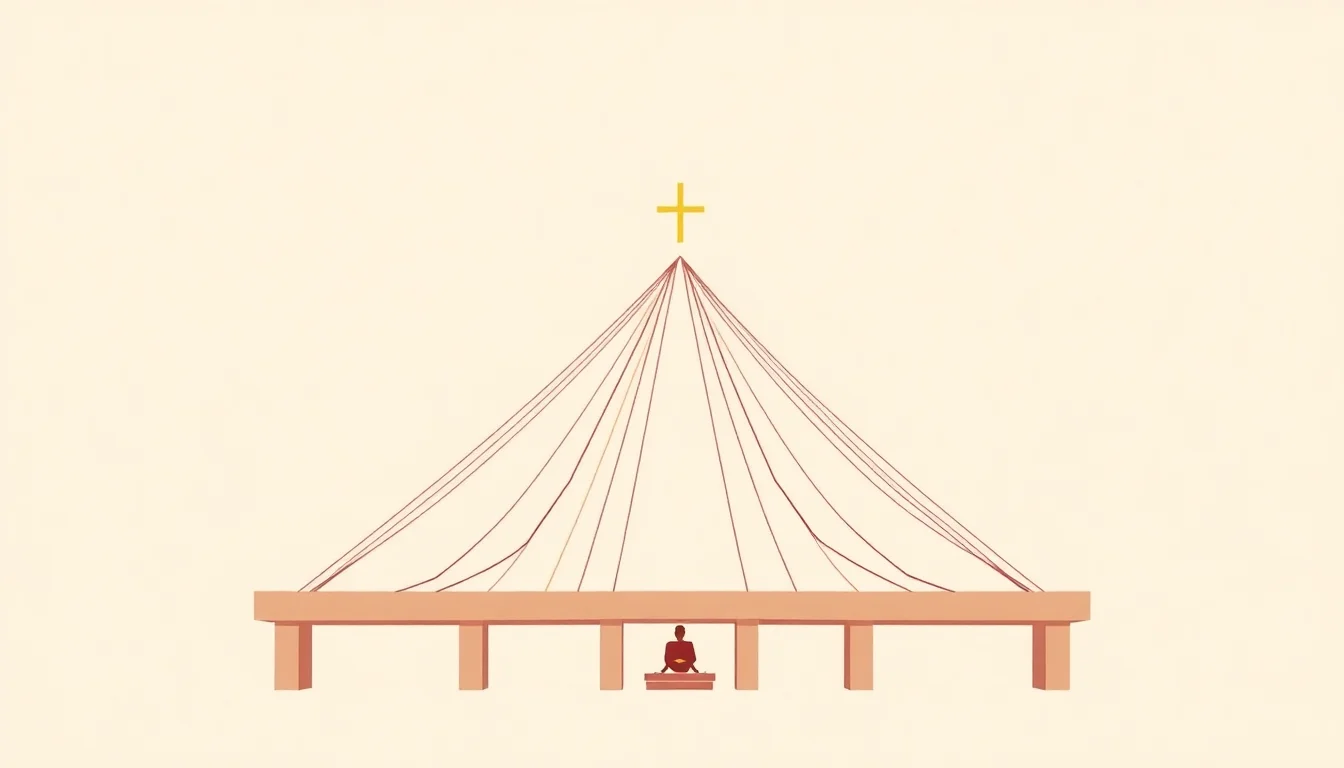
Theological frameworks are the conceptual architectures that underpin religious belief systems. Think of them as the operating systems for understanding the divine, the human condition, and the cosmos. They provide a coherent structure for interpreting scripture, tradition, and lived experience, offering answers to fundamental questions about existence, morality, and salvation. Without these frameworks, religious thought would be a chaotic jumble of disconnected ideas, rather than the organized systems of meaning we see across global traditions like Christianity, Islam, Judaism, Buddhism, and Hinduism. These frameworks are not static; they evolve, adapt, and are constantly debated by theologians and adherents alike.
🎯 Who Needs This Primer?
This primer is for anyone curious about the intellectual scaffolding of faith. Whether you're a student of comparative religion, a philosophy enthusiast, a spiritual seeker, or simply someone trying to understand the motivations behind major world events, this guide is your entry point. It’s designed for those who want to move beyond superficial understandings and grasp the underlying logic that shapes billions of lives. If you've ever wondered why different religions offer such distinct answers to the same existential questions, you're in the right place. This resource is particularly valuable for those engaging with religious studies or philosophy of religion.
📚 Core Concepts & Key Players
At the heart of theological frameworks lie core concepts such as eschatology (the study of end times), soteriology (the study of salvation), and cosmology (the study of the universe's origin and structure). Key figures like Augustine of Hippo (whose framework heavily influenced Western Christianity) and Thomas Aquinas (who synthesized Aristotelian philosophy with Christian theology) laid foundational stones. In the Islamic tradition, scholars like Al-Ghazali grappled with reconciling faith and reason, while in Eastern traditions, figures like Shankara developed Advaita Vedanta, a non-dualistic framework. Understanding these foundational ideas and the thinkers who shaped them is crucial for appreciating the diversity of religious thought.
⚖️ Frameworks in Action: Case Studies
Consider the stark contrast between the Calvinist framework's emphasis on predestination and divine sovereignty versus the Arminian framework's focus on free will and conditional election within Christianity. In Islam, the theological debates between the Ash'ari and Mu'tazila schools highlight differing views on divine justice and human agency. Even within Buddhism, the Mahayana framework's concept of bodhisattvas offers a different path to enlightenment than the Theravada focus on individual liberation. These examples demonstrate how differing theological frameworks lead to distinct practices, ethical systems, and understandings of the ultimate reality.
💡 Vibepedia's Vibe Score Breakdown
Vibepedia assigns a 'Vibe Score' (0-100) to theological frameworks based on their cultural energy, influence, and internal coherence. Frameworks with high scores, like Evangelical Christianity (Vibe Score: 85), often exhibit strong community engagement and clear doctrinal stances, driving significant cultural output. More contemplative or esoteric frameworks, such as Gnosticism (Vibe Score: 40), might have lower scores but possess a deep, albeit niche, intellectual resonance. The score reflects not just popularity but the framework's dynamic presence and impact within its sphere of influence, often influenced by factors like apologetics and hermeneutics.
🤔 The Controversy Spectrum
The controversy spectrum for theological frameworks ranges from 'Widely Accepted' to 'Highly Contentious'. For instance, the Nicene Creed, a foundational statement of Christian doctrine, is 'Widely Accepted' within mainstream Christianity, though its interpretation can still spark debate. Conversely, concepts like universalism (the belief that all souls will ultimately be saved) are 'Highly Contentious' in many religious traditions, often clashing with doctrines of eternal damnation or specific salvific paths. Vibepedia maps these debates, showing how theological ideas can become flashpoints for significant cultural and intellectual conflict, impacting everything from interfaith dialogue to political discourse.
Key Facts
- Year
- Ancient Origins (c. 3000 BCE)
- Origin
- Ancient Near East / India / Greece
- Category
- Philosophy & Religion
- Type
- Conceptual Framework
Frequently Asked Questions
Are theological frameworks only relevant to organized religions?
While most commonly associated with major world religions like Christianity and Islam, theological frameworks can also be found in less formalized spiritual movements, philosophical systems that address ultimate questions (like Stoicism or Neoplatonism), and even certain secular ideologies that offer comprehensive worldviews. The key is a structured approach to understanding existence, purpose, and the transcendent or ultimate.
How do I distinguish between a theological framework and a denomination or sect?
A theological framework is the underlying conceptual structure, the 'why' and 'how' of belief. Denominations (e.g., Methodism within Christianity) or sects are often specific institutional expressions or interpretations of a broader theological framework. Think of the framework as the blueprint and the denomination as a particular building constructed from it, potentially with unique architectural flourishes and modifications.
Can a theological framework change over time?
Absolutely. Theological frameworks are living intellectual systems. They evolve through new interpretations of sacred texts, engagement with contemporary philosophical ideas, responses to historical events, and internal scholarly debate. For example, the development of process theology represents a significant evolution within Christian theological thought, engaging with modern science and philosophy.
What is the role of reason versus revelation in theological frameworks?
This is a central tension. Some frameworks prioritize revelation (divine disclosure through scripture, prophets, etc.) as the primary source of truth, using reason to understand or defend it. Others, like Scholasticism, attempt to harmonize reason and revelation, arguing that both originate from God and should not conflict. The balance struck between these two influences is a defining characteristic of many frameworks.
How do different cultural contexts shape theological frameworks?
Cultural context is paramount. A framework developed in ancient Israel will naturally reflect its agrarian, tribal society, while one from medieval Europe will bear the imprint of feudalism and emerging universities. Globalization and the internet are now creating new cross-cultural theological dialogues and adaptations, leading to dynamic shifts in how ancient traditions are understood and expressed in diverse settings, impacting areas like inculturation.