
Contents
- 🔍 Introduction to Thyroid Hormones
- 🧬 The Biology of Thyroid Hormone Production
- 📈 The Role of Iodine in Thyroid Hormone Synthesis
- 👀 The Effects of Thyroid Hormone Deficiency
- 🏥 Simple Goitre: A Consequence of Iodine Deficiency
- 🔬 The Regulation of Metabolism by Thyroid Hormones
- 📊 The Interplay between T3 and T4
- 👨⚕️ Clinical Implications of Thyroid Hormone Imbalance
- 🌎 Geographic Variations in Iodine Deficiency
- 🔮 Future Directions in Thyroid Hormone Research
- 📚 Conclusion: The Importance of Thyroid Hormones
- Frequently Asked Questions
- Related Topics
Overview
Thyroid hormones, produced by the thyroid gland, play a crucial role in regulating metabolism, energy production, and overall health. The two primary thyroid hormones, triiodothyronine (T3) and thyroxine (T4), are responsible for maintaining the body's metabolic rate, influencing growth and development, and regulating the nervous system. Imbalances in thyroid hormone production can lead to conditions such as hypothyroidism and hyperthyroidism, which can have significant impacts on quality of life. According to the American Thyroid Association, approximately 20 million Americans suffer from thyroid disease, with women being five to eight times more likely to develop thyroid problems than men. The discovery of thyroid hormones dates back to 1891, when Swiss physician Emil Kocher first identified the thyroid gland's role in regulating metabolism. Today, research continues to uncover the complex relationships between thyroid hormones, metabolism, and overall health, with a growing focus on the potential links between thyroid function and other diseases, such as cardiovascular disease and osteoporosis.
🔍 Introduction to Thyroid Hormones
Thyroid hormones, specifically Triiodothyronine (T3) and Thyroxine (T4), are the primary hormones responsible for regulating Metabolism in the human body. Produced by the Thyroid Gland, these tyrosine-based hormones play a crucial role in maintaining the body's metabolic balance. The production of T3 and T4 is influenced by the availability of Iodine in the diet, which is essential for their synthesis. A deficiency in iodine can lead to decreased production of T3 and T4, resulting in a range of health issues. For instance, Iodine Deficiency can cause the thyroid gland to enlarge, leading to a condition known as Simple Goitre.
🧬 The Biology of Thyroid Hormone Production
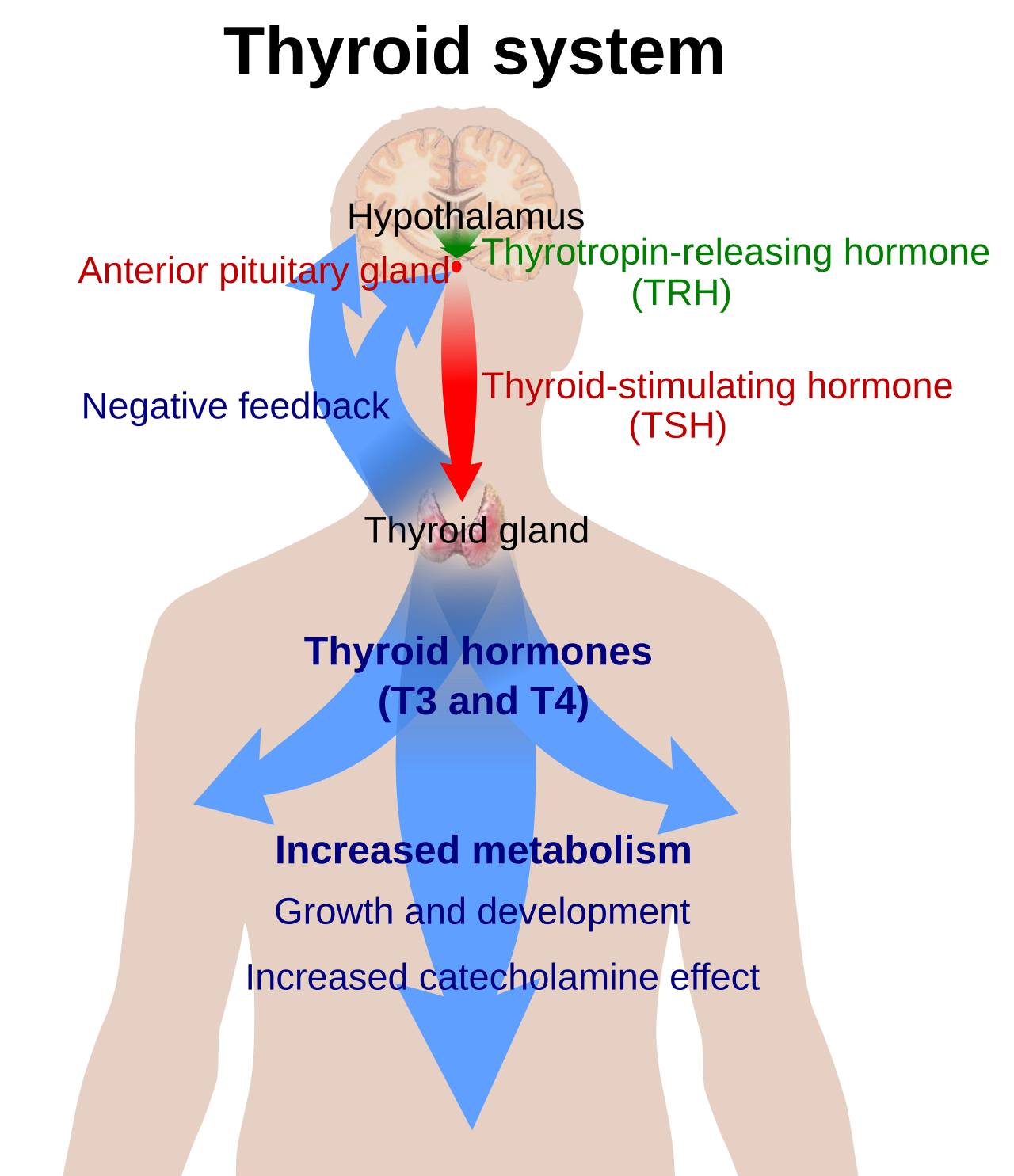
The biology of thyroid hormone production is complex and involves the coordination of multiple cellular processes. The Thyroid Gland produces T3 and T4 through a series of enzymatic reactions, which are regulated by the Hypothalamic-Pituitary-Thyroid Axis. This axis involves the release of Thyrotropin-Releasing Hormone (TRH) from the hypothalamus, which stimulates the release of Thyroid-Stimulating Hormone (TSH) from the pituitary gland. TSH then stimulates the thyroid gland to produce and release T3 and T4 into the bloodstream. The production of T3 and T4 is also influenced by the availability of Iodine, which is derived from food sources such as Iodized Salt and Seafood.
📈 The Role of Iodine in Thyroid Hormone Synthesis
Iodine plays a critical role in the synthesis of thyroid hormones, and its deficiency can have significant consequences for thyroid function. The recommended daily intake of iodine is approximately 150 micrograms per day, and deficiency can occur when this intake is not met. Iodine Deficiency can lead to a range of health issues, including Thyroid Enlargement and Simple Goitre. In addition, iodine deficiency can also affect Cognitive Development in children, particularly if the deficiency occurs during critical periods of development. The importance of iodine in thyroid hormone synthesis highlights the need for adequate dietary intake of this essential nutrient. For example, Iodized Salt is a common source of iodine, and its consumption can help prevent Iodine Deficiency.
👀 The Effects of Thyroid Hormone Deficiency
Thyroid hormone deficiency can have significant effects on the body, particularly if left untreated. Hypothyroidism is a condition characterized by decreased production of thyroid hormones, and can lead to a range of symptoms including Fatigue, Weight Gain, and Cold Intolerance. In addition, thyroid hormone deficiency can also affect Menstrual Cycle regulation in women, leading to irregular periods and Infertility. The diagnosis of thyroid hormone deficiency typically involves the measurement of Thyroid-Stimulating Hormone (TSH) and Free Thyroxine (FT4) levels in the blood. Treatment of thyroid hormone deficiency usually involves the administration of synthetic thyroid hormones, such as Levothyroxine.
🏥 Simple Goitre: A Consequence of Iodine Deficiency
Simple goitre is a condition characterized by the enlargement of the thyroid gland, and is often caused by Iodine Deficiency. The thyroid gland can become enlarged as it attempts to compensate for the lack of iodine, leading to the formation of a goitre. Simple Goitre can be treated with iodine supplementation, and in some cases, surgery may be necessary to remove the enlarged thyroid gland. The prevention of simple goitre is critical, and can be achieved through the consumption of iodized salt and other iodine-rich foods. For instance, Seafood is a rich source of iodine, and its consumption can help prevent Iodine Deficiency.
🔬 The Regulation of Metabolism by Thyroid Hormones
Thyroid hormones play a critical role in the regulation of metabolism, and their imbalance can have significant consequences for the body. The regulation of metabolism by thyroid hormones involves the stimulation of cellular processes, including Glycolysis and Lipolysis. Thyroid hormones also play a role in the regulation of Protein Synthesis and Cell Division. The imbalance of thyroid hormones can lead to a range of metabolic disorders, including Hypothyroidism and Hyperthyroidism. For example, Hyperthyroidism can lead to an increase in Basal Metabolic Rate, resulting in Weight Loss and Heat Intolerance.
📊 The Interplay between T3 and T4
The interplay between T3 and T4 is complex, and involves the conversion of T4 to T3 in the body. Triiodothyronine (T3) is the more active form of thyroid hormone, and is responsible for the majority of the metabolic effects of thyroid hormones. Thyroxine (T4), on the other hand, is the primary form of thyroid hormone produced by the thyroid gland, and is converted to T3 in the body. The ratio of T3 to T4 is critical, and an imbalance can lead to a range of metabolic disorders. For instance, an increase in T3 can lead to an increase in Basal Metabolic Rate, resulting in Weight Loss and Heat Intolerance.
👨⚕️ Clinical Implications of Thyroid Hormone Imbalance
The clinical implications of thyroid hormone imbalance are significant, and can have a major impact on the quality of life. Hypothyroidism and Hyperthyroidism are two common conditions that result from thyroid hormone imbalance, and can lead to a range of symptoms including Fatigue, Weight Gain, and Cold Intolerance. The diagnosis of thyroid hormone imbalance typically involves the measurement of Thyroid-Stimulating Hormone (TSH) and Free Thyroxine (FT4) levels in the blood. Treatment of thyroid hormone imbalance usually involves the administration of synthetic thyroid hormones, such as Levothyroxine.
🌎 Geographic Variations in Iodine Deficiency
Geographic variations in iodine deficiency are significant, and can have a major impact on the prevalence of thyroid disorders. Iodine Deficiency is more common in areas where the soil and water are deficient in iodine, and can lead to a range of health issues including Simple Goitre and Cretinism. The prevention of iodine deficiency is critical, and can be achieved through the consumption of iodized salt and other iodine-rich foods. For example, Iodized Salt is a common source of iodine, and its consumption can help prevent Iodine Deficiency.
🔮 Future Directions in Thyroid Hormone Research
Future directions in thyroid hormone research are focused on the development of new treatments for thyroid disorders, and a better understanding of the role of thyroid hormones in metabolism. Thyroid Hormone Research is a rapidly evolving field, and new discoveries are being made regularly. The development of new treatments for thyroid disorders, such as Thyroid Cancer, is critical, and can have a major impact on the quality of life. For instance, Thyroid Cancer Treatment can involve the use of Radioactive Iodine to destroy thyroid cancer cells.
📚 Conclusion: The Importance of Thyroid Hormones
In conclusion, thyroid hormones are the unsung heroes of metabolism, and play a critical role in maintaining the body's metabolic balance. The production of thyroid hormones is influenced by the availability of Iodine, and deficiency can lead to a range of health issues. The regulation of metabolism by thyroid hormones involves the stimulation of cellular processes, and their imbalance can have significant consequences for the body. Further research is needed to fully understand the role of thyroid hormones in metabolism, and to develop new treatments for thyroid disorders.
Key Facts
- Year
- 1891
- Origin
- University of Bern, Switzerland (Emil Kocher's laboratory)
- Category
- Endocrinology
- Type
- Biological Compound
Frequently Asked Questions
What are thyroid hormones?
Thyroid hormones are two hormones produced and released by the thyroid gland: Triiodothyronine (T3) and Thyroxine (T4). They are tyrosine-based hormones that are primarily responsible for regulating Metabolism.
What is the role of iodine in thyroid hormone synthesis?
Iodine is essential for the synthesis of thyroid hormones, and its deficiency can lead to a range of health issues including Simple Goitre and Cretinism. The recommended daily intake of iodine is approximately 150 micrograms per day.
What are the effects of thyroid hormone deficiency?
Thyroid hormone deficiency can have significant effects on the body, particularly if left untreated. Hypothyroidism is a condition characterized by decreased production of thyroid hormones, and can lead to a range of symptoms including Fatigue, Weight Gain, and Cold Intolerance.
How is thyroid hormone imbalance diagnosed?
The diagnosis of thyroid hormone imbalance typically involves the measurement of Thyroid-Stimulating Hormone (TSH) and Free Thyroxine (FT4) levels in the blood. Treatment of thyroid hormone imbalance usually involves the administration of synthetic thyroid hormones, such as Levothyroxine.
What are the clinical implications of thyroid hormone imbalance?
The clinical implications of thyroid hormone imbalance are significant, and can have a major impact on the quality of life. Hypothyroidism and Hyperthyroidism are two common conditions that result from thyroid hormone imbalance, and can lead to a range of symptoms including Fatigue, Weight Gain, and Cold Intolerance.